
public
Unraveling the myths: Do casinos really have a house edge?
The Concept of House Edge in Casinos
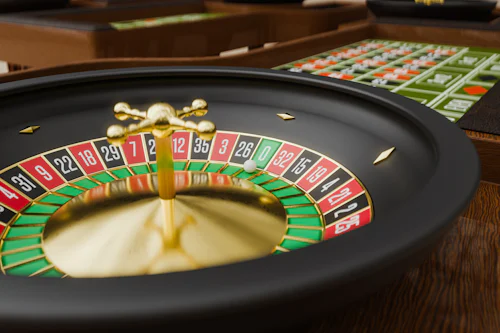
The house edge is a fundamental principle in the gambling industry that reflects the advantage that casinos hold over players across various games. This advantage is structured in such a way that, over time, the casino is statistically likely to come out ahead. Essentially, the house edge is a mathematical representation of the casino’s advantage, expressed as a percentage of the total bets placed by players. For example, in a game like roulette, different types of bets carry different house edges, which ultimately influences a player’s potential returns and overall experience at the table. Many players also enjoy trying their luck with online pokies new zealand , which can offer a different kind of excitement and rewards.
This house edge varies significantly among different games found in casinos. For instance, slot machines typically present a house edge that ranges from around 2% to 15%, depending on the specific machine and its programming. In contrast, table games like blackjack can feature a much lower house edge, sometimes dipping below 1% if players utilize optimal strategy. The variation in house edge arises due to different rules, payout structures, and the inherent randomness involved in each game. By understanding these differences, players can make informed choices about which games to engage with, aligning their strategies with personal risk tolerance and gaming objectives.
Moreover, it is essential to note that the house edge does not guarantee immediate losses for players. While the odds favor the house over the long term, individual gaming sessions can yield substantial wins for players. This phenomenon creates a perception among players that they can beat the odds, leading them to overlook the long-term nature of the house edge. Therefore, while the house maintains an advantage, luck and strategic decision-making can sometimes tip the balance in favor of the player, at least for a while, leading to an exhilarating gaming experience.
Myths Surrounding the House Edge
One of the most prevalent myths surrounding the house edge is the belief that a lower house edge guarantees a higher chance of winning for players. While it is true that a lower house edge indicates better odds, this does not ensure victory in any single gaming session. Players might indeed win at games with a high house edge on occasion; however, they will likely find that they lose consistently over time due to the built-in advantage that the casino holds. It is crucial to recognize that luck plays a significant role in gambling, and a lower house edge merely reduces the casino’s advantage rather than eliminating it altogether.
Another common misconception is the notion that the house edge can be manipulated or cheated. In reality, casinos implement sophisticated algorithms and stringent security measures to ensure fairness in games and maintain the integrity of random number generators used in electronic games. Attempts to cheat or exploit the system not only detract from the enjoyment of gambling but also invite severe repercussions, including legal action and lifetime bans from establishments. Hence, gambling should be approached primarily as a form of entertainment rather than an avenue to outsmart the house.
Finally, many players operate under the assumption that various betting systems can overcome the house edge. Strategies like the Martingale system, where players double their bets after each loss, may produce temporary wins but invariably fail in the long run due to the persistent house edge. Such systems can lead to significant losses, especially during prolonged losing streaks. A critical understanding to embrace is that no betting strategy can change the fundamental odds of the games; the house edge will consistently be a factor influencing gameplay.
The Role of Randomness and Casino Games
The element of randomness plays a pivotal role in casino games and directly intertwines with the concept of house edge. Games of chance, such as slots and roulette, depend on random outcomes, rendering it virtually impossible to predict results with certainty. This randomness is integral to the excitement of gambling, yet it also means that even with a favorable house edge, players can experience both wins and losses in unpredictable ways. By understanding the nature of randomness, players can better manage their expectations during gameplay and approach their gaming sessions with a balanced mindset.
Conversely, skill-based games like poker offer players the opportunity to influence their outcomes through strategic thinking and decision-making. While poker does carry a house edge, skilled players can mitigate this edge through smart play, bluffing, and an astute understanding of their opponents. In this context, while the house edge remains a factor, a player’s skill can significantly alter the dynamics of the game, allowing for the potential for greater payouts compared to games that rely solely on chance.
This distinction highlights the importance for players to recognize the type of game they are engaging in. Those who enjoy games of pure chance may revel in the unpredictability of their outcomes, while strategy-driven players may focus on honing their skills to minimize the impact of the house edge. A deeper understanding of both randomness and skill in relation to the house edge can enhance the overall gaming experience, equipping players to approach gambling more wisely and effectively.
The Psychological Aspect of Gambling
The psychological dynamics of gambling significantly influence how players perceive the house edge and their overall gaming experience. Many individuals develop an emotional attachment to winning, leading them to overlook statistical realities and the inherent risks of the games. This attachment can precipitate a phenomenon known as ‘gambler’s fallacy’—the erroneous belief that past outcomes have a bearing on future results. For instance, a player may feel ‘due’ for a win after experiencing a string of losses, disregarding the fact that every spin or hand is an independent event dictated by chance.
This psychological aspect often pushes players toward risky behavior, where they chase losses in a desperate attempt to reclaim lost funds. Unfortunately, this approach can amplify their losses, as players may increase their betting amounts, convinced that they can outsmart the house edge. It is crucial for gamblers to maintain a clear understanding of their risk levels and to set firm boundaries regarding their gambling activities. Recognizing the psychological factors at play can empower players to make more rational decisions and foster a healthier relationship with gambling.
Additionally, casinos utilize various tactics to heighten emotional responses, thereby encouraging players to remain engaged for longer periods. Flamboyant lights, enticing sounds, and the exhilaration of witnessing wins can create a cocktail of excitement that often overshadows the reality of the house edge. By recognizing these strategies, players can approach gambling more consciously, allowing them to appreciate the entertainment value while remaining aware of the underlying principles of chance and the advantage held by the house.
Final Thoughts on House Edge and Responsible Gambling
Understanding the concept of house edge and dispelling associated myths are vital components of responsible gambling. Players who grasp that the house edge represents a calculated advantage across all games can approach casino gaming with a more balanced and informed mindset. This awareness fosters a healthier relationship with gambling, emphasizing enjoyment over the desire for profit. Individuals can engage in their favorite games while remaining conscious of the odds that favor the house, leading to a more fulfilling experience.
The significance of responsible gambling cannot be overstated. Setting clear limits on both time and money spent in casinos can enhance the enjoyment of the experience and minimize stress. Players should prioritize entertainment and fun, rather than viewing gambling as a solution to financial problems. By practicing self-control and understanding the realities of the house edge, individuals can enjoy the thrill of the game while avoiding adverse patterns and potential pitfalls.
Ultimately, the dialogue surrounding house edge and gambling extends beyond mere statistics; it encompasses personal choices and heightened awareness. By educating themselves about the mechanics of games and the inherent odds, players can enrich their knowledge and enjoyment of the casino experience. Whether one is a casual player or a seasoned gambler, a solid understanding of these principles will contribute greatly to responsible gaming habits and a more enjoyable gambling experience overall.
